
Haircut Ideas by Face Shape
Find the best men's haircut for your face shape. Explore expert styling guides for oval, round, square, oblong, diamond, and heart face shapes to balance proportions, accentuate your jawline, and optimize facial symmetry.
All Posts on Haircut Ideas by Face Shape
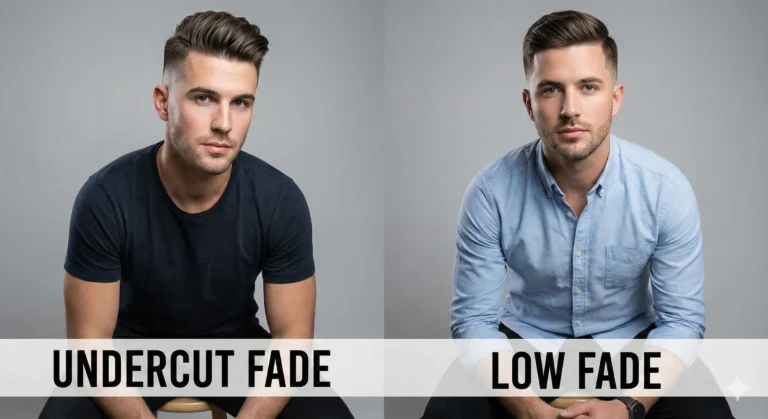

Undercut Fade vs Low Fade Comparison
The right haircut can change your look. Two common choices today are the undercut fade and the low fade. Both look neat...
Read More about Undercut Fade vs Low Fade ComparisonMen's Haircut Ideas by Face Shape: The Definitive Matching Guide
Selecting an exceptional men's haircut is a masterclass in anatomical geometry and optical proportion. A haircut should never be chosen in isolation; it must harmonize with your specific facial bone structure, hairline contour, and cranial symmetry. The overarching objective of professional hairstyling is to create the visual illusion of an oval face shapethe universal standard of aesthetic balance. A haircut can add vertical height to elongate a round face, soften the harsh angles of a square jaw, add horizontal width to a long face, or accentuate high cheekbones on a diamond face. This comprehensive guide covers facial shape measurement, geometric proportion principles, and tailored haircut recommendations for every male face shape.
Historical Evolution and Cultural Context
The science of facial proportions dates back to the Golden Ratio (Phi) celebrated by Renaissance artists like Leonardo da Vinci. In the 20th century, master barbers and portrait photographers developed structural haircutting principles to correct facial asymmetries. Today, modern digital styling and precision barbering utilize these mathematical principles to customize fades, tapers, and volume placement for every client.
Key Styles, Cut Anatomy, and Variations
Haircuts must be customized to your specific facial geometry:
- Round Face: Needs vertical height and short sides (Pompadour, Quiff, High Skin Fade, Textured Crop).
- Square Face: Strong jawline; suits classic side parts, buzz cuts, crew cuts, and textured crops.
- Oblong / Long Face: Needs side fullness and no extreme height (Classic Taper, Side Part, Layered Scissor Cut).
- Oval Face: Balanced proportions; versatile for virtually all haircuts (Fades, Buzz, Quiffs, Long Flow).
- Diamond & Heart Face: Wide cheekbones or forehead with a narrow chin; benefits from textured fringes and medium flow.
Face Shape and Hair Texture Compatibility Matrix
Selecting the optimal haircut requires understanding how hair density, curl pattern, and cranial bone structure interact:
| Face Shape | Proportion Goal | Recommended Haircuts | Cuts to Avoid |
|---|---|---|---|
| Round | Add height, slim the cheeks | Pompadour, Quiff, High Fade, Undercut | Buzz cuts, bowl cuts, full sides |
| Square | Highlight jaw, soften angles | Crew cut, Classic side part, Textured crop | Blunt geometric fringe |
| Oblong | Add width, avoid height | Side part, Scissor crop, Medium flow | High pompadours, high skin fades |
| Oval | Maintain natural balance | Buzz cut, Quiff, Taper fade, Slick back | Heavy forward bangs that hide forehead |
| Diamond/Heart | Balance forehead and chin | Textured fringe, Mid taper, Curtain bangs | High skin fades that widen temples |
Step-by-Step Styling and Barber Execution Protocol
Follow this sequential framework to achieve salon-quality styling and structural hold at home:
- Measure Four Key Dimensions: Forehead width, cheekbone width, jawline width, and face length from hairline to chin.
- Determine Your Face Shape: Match your ratios to round, square, oblong, oval, heart, or diamond.
- Select Volume Placement: Place volume on top for round faces; place volume on sides for oblong faces.
- Consult Your Barber: Discuss your face shape and bring photos matching your bone structure.
Essential Products, Formulations, and Styling Tools
Mastering hair texture requires the proper combination of pre-stylers, finishing clays, and professional tools:
Requires styling clays for height, texturizing sprays for movement, and wide-tooth combs.
Professional Barbershop Secrets and Edge Precision
Incorporate these master barber techniques to maintain clean contours and sharp graduation between appointments:
Parting your hair on the side can break up facial symmetry, immediately flattering round and square faces.
Common Haircut Mistakes and How to Avoid Them
Avoid these frequent styling pitfalls that compromise hair health and visual balance:
- Adding Height to an Oblong Face: Tall pompadours make long faces look disproportionate.
- Keeping Bushy Sides on a Round Face: Widens the face further.
Seasonal Care and Maintenance Cadences
Environmental fluctuations impact hair cuticle hydration and scalp sebum production. Adapt your regimen across seasons:
Adapt your styling volume across seasons while keeping proportions aligned with your face shape.
Barbershop Communication, Terminology, and Consultation Guide for Haircut Ideas by Face Shape
Achieving your ideal haircut requires clear, precise communication with your master barber. Never rely solely on generic names like 'short back and sides' or 'medium fade,' as barber interpretations vary widely. When requesting haircut ideas by face shape, specify exact guard numbers (e.g., '#1 closed tapering into a #2 on the temples'), define your preferred neckline finish (tapered vs. squared vs. rounded), state whether you want scissor texture or point-cutting on top, and bring two or three high-resolution reference photographs displaying the front, side profile, and back angles. An expert barber will assess your hair growth whorls, cowlicks, temporal recession, and skull geometry to customize the perimeter boundaries to your unique anatomy.
Blow-Drying Mechanics, Directional Airflow, and Pre-Styling Chemistry
Eighty percent of any great hairstyles volume, texture, and structural direction is established during the initial blow-dry rather than by finishing products alone. Apply a heat-activated pre-stylersuch as a mineral sea salt spray or lightweight grooming tonicto clean, towel-damp hair. Use a vented tunnel brush or round boar-bristle brush while blow-drying on medium heat, directing the airflow from roots to tips in the natural direction of desired hair flow. Maintain the dryer nozzle at a 45-degree angle approximately three inches from the hair to avoid scorching the keratin cuticle. Conclude the blow-dry with a 10-second blast of cold air (the 'cool shot' button) to contract the cuticle layer, lock the volume in place, and impart natural shine.
Scalp Health, Follicular Longevity, and Trimming Schedules
Healthy, vibrant hair requires an optimal scalp environment. The human scalp contains over 100,000 hair follicles that produce natural protective sebum. To prevent sebum buildup, follicular inflammation, and fungal flaking (Malassezia), wash your hair two to three times weekly with a sulfate-free botanical cleanser, massaging the scalp with circular fingertip pressure to stimulate microvascular perfusion. Schedule precision maintenance trims according to your style's requirements: short fades and precision line-ups require touch-ups every two weeks, classic crew cuts and tapers every three to four weeks, and medium-to-long textured flow styles every six to eight weeks to eliminate split ends and maintain clean geometric proportions.
Barbershop Communication, Terminology, and Consultation Guide for Haircut Ideas by Face Shape
Achieving your ideal haircut requires clear, precise communication with your master barber. Never rely solely on generic names like 'short back and sides' or 'medium fade,' as barber interpretations vary widely. When requesting haircut ideas by face shape, specify exact guard numbers (e.g., '#1 closed tapering into a #2 on the temples'), define your preferred neckline finish (tapered vs. squared vs. rounded), state whether you want scissor texture or point-cutting on top, and bring two or three high-resolution reference photographs displaying the front, side profile, and back angles. An expert barber will assess your hair growth whorls, cowlicks, temporal recession, and skull geometry to customize the perimeter boundaries to your unique anatomy.
Blow-Drying Mechanics, Directional Airflow, and Pre-Styling Chemistry
Eighty percent of any great hairstyles volume, texture, and structural direction is established during the initial blow-dry rather than by finishing products alone. Apply a heat-activated pre-stylersuch as a mineral sea salt spray or lightweight grooming tonicto clean, towel-damp hair. Use a vented tunnel brush or round boar-bristle brush while blow-drying on medium heat, directing the airflow from roots to tips in the natural direction of desired hair flow. Maintain the dryer nozzle at a 45-degree angle approximately three inches from the hair to avoid scorching the keratin cuticle. Conclude the blow-dry with a 10-second blast of cold air (the 'cool shot' button) to contract the cuticle layer, lock the volume in place, and impart natural shine.
Scalp Health, Follicular Longevity, and Trimming Schedules
Healthy, vibrant hair requires an optimal scalp environment. The human scalp contains over 100,000 hair follicles that produce natural protective sebum. To prevent sebum buildup, follicular inflammation, and fungal flaking (Malassezia), wash your hair two to three times weekly with a sulfate-free botanical cleanser, massaging the scalp with circular fingertip pressure to stimulate microvascular perfusion. Schedule precision maintenance trims according to your style's requirements: short fades and precision line-ups require touch-ups every two weeks, classic crew cuts and tapers every three to four weeks, and medium-to-long textured flow styles every six to eight weeks to eliminate split ends and maintain clean geometric proportions.
Summary and Personal Aesthetic Philosophy
Your hairstyle is the primary architectural frame of your face and the most visible expression of your personal aesthetic. By understanding your facial geometry, selecting the proper cut, investing in quality styling products, and maintaining regular barber appointments, you project an enduring aura of confidence, grooming discipline, and effortless style.
Frequently Asked Questions
Got questions? We've got answers. Explore our most asked questions about haircut ideas by face shape.
Measure the width of your forehead, cheekbones, and jawline, along with your vertical face length. Compare these four measurements to identify your face shape.
Styles with volume on top and short sideslike a pompadour, high skin fade with quiff, or textured cropelongate the face and slim the cheeks.
Square faces have strong jawlines and suit classic crew cuts, side parts, buzz cuts, and textured crops that highlight masculine bone structure.
Avoid very tall pompadours or high skin fades that add excessive vertical height. Opt for classic scissor cuts with fuller sides instead.
The oval face shape is the most versatile because of its balanced proportions, accommodating buzz cuts, fades, quiffs, and long hair with ease.
A textured French crop with a forward fringe or messy quiff covers the forehead and blends seamlessly with receding temple corners.